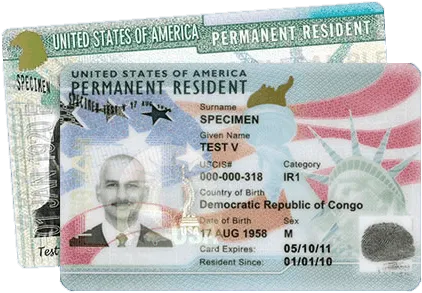
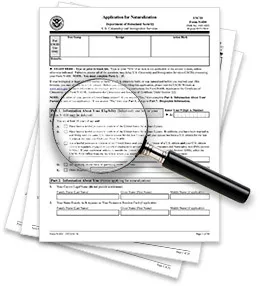

Some family members of green card holders may, under certain circumstances, petition to obtain green cards of their own through Form I-130, Petition for Alien Relative, with United States Citizenship and Immigration Services (USCIS).
Certain qualifications apply for anyone wishing to help their family member obtain a green card. And the timeline for applications can vary depending on which family member is applying and where in the world they are living. Find out what you can expect when filling out Form I-130.
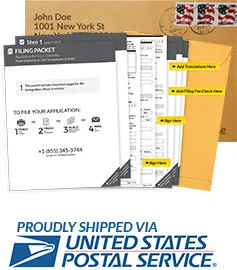
Get help with your Form I-130 application through a qualifying family member with FileRight today.
Who Can Apply for a Family-Based Green Card Using Form I-130?
Both U.S. citizens and green card holders use Form I-130 to petition for qualified relatives to receive legal permanent residency (LPR) status. U.S. citizen qualified relatives are:
- Husband and wife (spouse)
- Biological parents, step-parents, and adoptive parents
- Brothers and sisters, adopted siblings, step-siblings, and half siblings
- Unmarried or married sons and daughters under the age of 21
- Unmarried children or married children over the age of 21
Preference of these qualified relatives is given to immediate relatives with spouses and children at the top of the list. LPR qualified relatives are:
- Husbands and wives
- Unmarried sons and daughters under the age of 21
- Unmarried sons and daughters over the age of 21
Main Features of Family-Based Green Cards
Family-based green cards have a number of advantages and drawbacks compared to other types.
- The applicant’s work history won’t impact their eligibility.
- Their spouse and unmarried children of the primary applicant may also qualify for a green card.
- A green card holder can lose theirs if they commit a crime, fail to note a change of address, or if you make their primary residence outside of the United States.
- Green card holders who keep their card for five years (three years if married to a United States citizen).
Things to Remember When Completing Form I-130
Before completing Form I-130, you want to ensure that you have everything you need. Making a mistake (like including the wrong fee) or having missing information on your form can delay processing or even get your application denied. A few things to remember:
- Answer all questions fully and honestly
- Provide supporting evidence for your claims about yourself and your family member
- Include your form of payment with your application
- Sign your petition
How Long Does It Take to Get a Green Card Through Your Family?
The amount of time it takes to receive a green card through a qualified family member depends on where they live, whether they are a U.S. citizen or green card holder, and the family member’s relationship to them.
For qualified family members of an U.S. citizen, the times it can take for them to receive a green card are as follows:
- Spouses: 10-13 months for those residing in the U.S., 10-17 months for those residing outside the U.S.
- Widows: 10-13 months.
- Parents: 10-13 months.
- Minor children (21 and Under): 10-13 months.
- Unmarried adult children: 8-9 years. For citizens of the Philippines: 10+ years. For citizens of Mexico: 20+ years.
- Married adult children: 13-14 years. For citizens of Mexico and the Philippines: 22+ years.
- Siblings: 14-16 years. For citizens of India: 16+ years. For citizens of Mexico: 20+ years. For citizens of the Philippines: 24+ years.
The times it can take to for a qualified LPR relative to receive a green card are as follows:
- Spouses: 29-38 months for those residing in the U.S., 23-32 months for those residing outside the U.S
- Minor children (21 and Under): 23-38 months.
- Unmarried adult children: 8-9 years. For citizens of the Philippines: 10+ years. For citizens of Mexico: 20+ years.
USCIS Filing Fees for Petition for Alien Relative (Form I-130)
There are some filing fees for Form I-130 that total up to $675, so you’ll want to make sure that everything is correct before submitting it.
- FileRight application package preparation fee is $395 .
- USCIS filing fees for Form I-130 is $675
USCIS won’t refund your money, even if your application is denied. We’ll help ensure your application is correct and complete.
What Happens After I Submit My Petition?
Once USCIS receives your Form I-130, the agency processes the application. USCIS will then send you:
- A confirmation receipt notice of your petition
- A notice of a biometrics appointment date
- An interview appointment date may be scheduled
- A written notice or decision
Normally, when the USCIS approves the petition, the agency sends it to the U.S. Department of State’s National Visa Center (NVC).
When a visa is available, the NVC notifies both your and your relative of the invitation to apply for an immigrant visa. The invitation extends to qualifying dependents as well.
When the time comes for the relative to immigrate, the petitioner must agree to be his or her financial sponsor by filing You’ll file Form I-864, Affidavit of Support when the time comes for your relative to immigrate.
The form states your commitment of financial support to your immigrating relative